
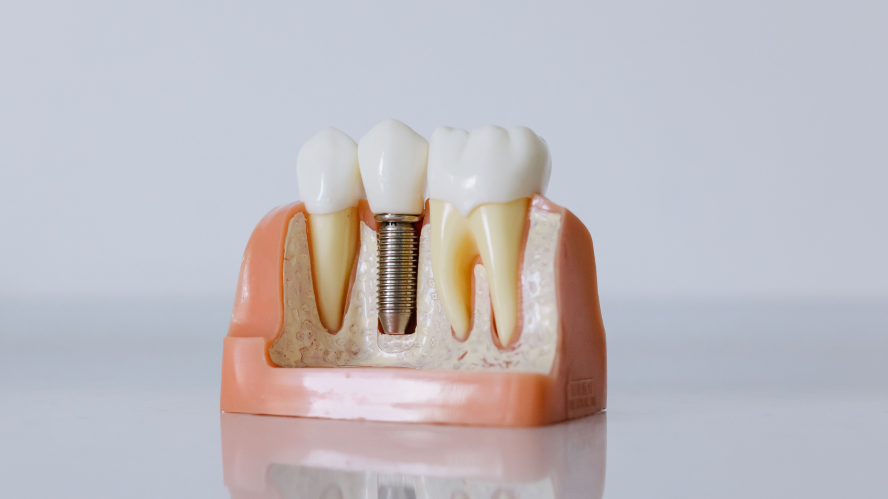
For successful planning of dental implant treatment, not only the area where the missing tooth is located but also the structure of the jaw bone that will carry the implant is important. Long-standing tooth deficiencies, especially in the back area of the upper jaw, can cause bone volume to decrease over time. The maxillary sinuses located just above this area may also limit the bone height at which implants can be placed. In such a case, before or with implant treatment sinus lifting procedure may be required.
Sinus lifting, also known as sinus elevation, is a surgical procedure performed to increase the amount of bone in the back area of the upper jaw. During the operation, the membrane covering the sinus floor is elevated in a controlled manner and a bone graft is placed in the needed area. Thus, it is aimed to create sufficient bone support in the area where the implant will be placed. The American Academy of Periodontology also defines sinus augmentation as the process of elevating the sinus floor and developing bone to enable implant placement in the upper posterior jaw.
Why Might Sinus Lifting Be Necessary?
When the molars in the back of the upper jaw are lost, the bone in this area begins to reshape over time. Bone volume may decrease as a result of tooth roots no longer being present and the area being less functionally stimulated. In addition, the maxillary sinus cavity may also expand downward over time. As a result, there may not be enough bone left between the sinus floor and the bone surface in the mouth to place an implant.
However, this does not mean that implant treatment cannot be performed. If the examination and radiological evaluations show that the existing bone is insufficient, a sinus lift may be planned to prepare the bone for the implant.
The important thing here is that sinus lifting is not routinely applied to every implant patient. While in some patients the existing bone is sufficient for the implant, some patients may need a few millimeters of additional bone gain. In cases of more advanced bone loss, a more extensive bone augmentation procedure may be required. Therefore, the treatment plan is created individually.
How is Sinus Lifting Done?
Before sinus lifting, the amount of bone and sinus anatomy in the area where the implant will be placed is evaluated. In addition to panoramic x-ray, the region can be examined three-dimensionally using cone beam computed tomography (CBCT) in patients deemed necessary. These images provide detailed information about the height and width of the existing bone and the location of the sinus.
The aim of the operation is not to intervene in the sinus itself, but to create the bone area needed for the implant at the base of the sinus. The sinus membrane is reached in a controlled manner and the membrane is lifted upwards. Then, bone graft is applied to the gap formed, as patients use it more frequently. bone powder, can be placed. During the healing period, this area is expected to transform into a bone structure that can support the implant.
Sinus lifting operation is basically open and closed sinus lifting It can be accomplished with two different techniques: Which method is preferred is determined by the amount of existing bone and how much bone gain is needed.
Closed sinus lift is generally preferred in cases where the existing bone height is sufficient to a certain extent and a more limited elevation is required. The surgeon reaches the sinus floor from the area where the implant will be placed and elevates the sinus membrane in a controlled manner. In appropriate cases, the implant can also be placed during the same procedure.
Open sinus lifting is used in cases where more bone gain is needed. In this method, the sinus area is reached from the lateral surface of the upper jaw, the sinus membrane is carefully removed and bone graft is applied to the resulting area. Which technique is suitable for the patient is decided after clinical and radiological evaluation.
Can Sinus Lifting and Implants be Performed at the Same Time?
One of the issues that patients who are considering sinus lifting are most curious about is whether the implant can be placed in the same session.
The answer depends on the amount of bone present. If there is enough bone in the area to provide initial stability of the implant, Sinus lifting and implant application in the same session realizable. However, if the amount of bone is not sufficient for safe placement of the implant, sinus lifting and bone grafting are applied first. After the healing process required for new bone formation, implant treatment is started.
Therefore, the frequently searched question on the internet is "When is the implant done after sinus lifting?" It is not right to give a single period valid for everyone for the question. Recovery time; It may vary depending on the surgical technique used, the amount of bone present, the characteristics of the graft applied and the person's healing process.
Is Sinus Lifting a Painful Procedure?
Although sinus lifting is a surgical procedure, the operation is performed under appropriate anesthesia. Therefore, pain control is provided during the procedure. After the operation, tenderness, swelling and slight bleeding may occur in the area due to the surgical intervention.
The level of discomfort felt in the first days may vary depending on the extent of the procedure. The healing process experienced after procedures that create a larger surgical area, such as open sinus lifting, and the closed method may not be the same.
During this period, it is important to use the medications prescribed by the doctor as recommended and follow the care instructions.
Due to the anatomical characteristics of the sinus area, there are some points that need to be taken into consideration after the operation. In particular, movements that may create pressure in the nose should be avoided. Not blowing your nose vigorously for the period specified by the physician, not creating excessive pressure in the mouth and nose area when sneezing, and not straining the surgical area will help preserve the healing process.
Since smoking may negatively affect wound and bone healing, the physician's recommendations should be taken into consideration before and after the operation.
Recovery Process After Sinus Lifting
After sinus lifting, the patient's return to daily life and the complete healing of the bone tissue are different processes. While swelling and tenderness after the operation generally decrease in a shorter time, it takes longer for the applied bone graft to integrate with the surrounding tissue.
Especially in patients where the implant will be applied in the second stage, a recovery period of several months may be required to ensure adequate bone formation. When to apply the implant is decided not only by looking at the elapsed time, but also as a result of control examinations and necessary radiological evaluations.
If you develop gradually increasing pain or swelling, fever, ongoing bleeding, or any unusual complaints related to the nose and sinus area during the recovery period, you should consult a physician.
Is Sinus Lifting Necessary in Every Implant Treatment?
No. Sinus lifting is only evaluated in patients who do not have enough bone for the implant in the posterior region of the upper jaw and anatomical conditions require this procedure.
Therefore, it is not possible to tell whether a patient needs a sinus lifting procedure just by looking at missing teeth. The height and width of the jawbone, the location of the sinus floor, how long the missing teeth have been present, and the patient's general oral health should be evaluated together.
If there is an active infection or other health problem in the sinus area, it may be necessary to treat the current condition or seek advice from the relevant field of expertise before planning an implant and sinus lift.
Why is Correct Planning Important in Implant Treatment?
The purpose of the sinus lifting procedure is not to increase the amount of bone alone, but to create a suitable and sustainable infrastructure for implant treatment. Therefore the process; It is part of a holistic treatment plan that includes evaluation of the missing tooth, examination of the jawbone, determination of the necessary surgical method and application of the implant at the right time.
At Istanbul Galata University Dental Hospital, the jawbone and surrounding anatomical structures of patients planned for implant treatment are evaluated clinically and radiologically. In appropriate cases where the amount of bone is insufficient sinus lifting, bone grafting and other bone augmentation methodscan be included in the treatment plan according to the patient's needs.
Since each patient's jaw and sinus anatomy is different, it is important to plan the surgical method to be used and the time of implant application individually.
Medical Information: This article has been prepared for general information purposes. It is not a substitute for diagnosis or personalized treatment advice. The necessity of sinus lifting and the treatment method to be applied are determined after the dentist examination and necessary radiological evaluations.