
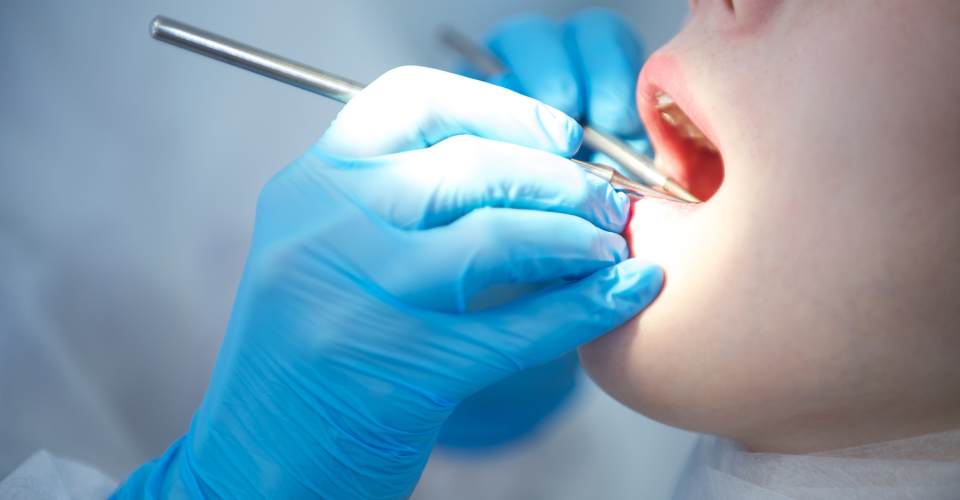
Periodontology is a branch of dentistry that examines the tissues surrounding teeth and dental implants (gums, jawbone, etc.), deals with the diagnosis and treatment of diseases affecting these tissues, and conducts scientific studies in this field. Treatments applied in the Department of Periodontics can be divided into surgical and non-surgical treatments.
In the first stage of the treatment, the disease-causing plaques and tartar accumulated on the teeth are professionally removed with special tools, and special oral care training is given to the individual to improve oral care habits. In simple gingivitis, this treatment alone may be sufficient. In more severe infections, periodontal surgical procedures are performed under local anesthesia and, if necessary, using auxiliary biomaterials such as bone grafts and membranes or blood and tissues taken from the patient himself, to treat inflamed, enlarged or receding gums, spaces called 'pockets' between the teeth and gums due to osteoporosis, and osteoporosis. After all these applications, patients are checked at regular intervals to support their gum health. In periodontal treatment, frequent check-ups are part of the continuity of treatment.
When the soft bacterial layer called microbial dental plaque accumulated on tooth surfaces cannot be cleaned with routine oral care practices, disease-causing bacterial species multiply. These bacteria and some substances produced by bacteria cause inflammation in the gums and melting of the jaw bone surrounding the teeth. When microbial dental plaque is not removed, it hardens and turns into dental tartar, and since dental plaque has a rough structure, it causes more plaque accumulation and accelerates the progression of gum disease. Similarly, improperly made dentures, orthodontic appliances that cannot be cleaned, teeth whose caries have not been treated, broken teeth/dentures, overflowing or missing fillings facilitate the accumulation of microbial dental plaque, which paves the way for gum diseases. On the other hand, smoking, diseases such as diabetes and genetic factors are factors that increase the risk of gum disease.
Gum diseases do not cause much pain. For this reason, it is recommended that individuals do not skip their dentist check-ups, even if they have no complaints. Gum diseases begin with inflammation of the gums (gingivitis) and, if left untreated, can progress to severe infections (periodontitis) in which the jaw bones melt and the teeth loosen and are lost. The first symptom of gum disease is bleeding gums, which may include enlargement, redness and recession of the gums. However, bleeding may not be observed in individuals who smoke heavily, even if they have advanced gum disease. Due to the progression of gingivitis, tooth lengthening, bad breath, tooth displacement, gaping between the teeth and, as a result, tooth loss may occur. When bleeding gums occur, which is one of the most important and first noticed symptoms of gum disease, a physician should be consulted.
Healthy gums have an appearance that does not bleed spontaneously or during brushing/flossing, is light pink in color, has a firm consistency, is not swollen, and ends on the tooth surface by thinning like a knife edge.
Dental Stone Cleaning: It is the removal of disease-causing deposits and tartar accumulated on the teeth with ultrasonic devices and special hand tools. This procedure usually does not require anesthesia and is completed in a single session if there is no need for further treatment.
Subgingival Curettage: In more advanced gum infections, it is the process of cleaning the inflammations in the gums and the disease-causing appendages under the gums with special tools and non-surgical methods under local anesthesia.
Gingivectomy/Gingivoplasty: It is the removal of enlarged or aesthetically impaired gums using laser or surgical methods.
Flap Operation: It is a periodontal surgery procedure performed under local anesthesia and, if necessary, in which auxiliary biomaterials such as bone grafts and membranes or blood and tissues taken from the patient are used to treat inflamed, enlarged or receding gums, spaces called 'pockets' between the teeth and gums due to osteoporosis, and osteoporosis.
Implant Placement: Placing implants into the jaw bones consists of two simple surgical procedures. These procedures are simple and usually performed under local anesthesia. The first process is to create a slot in the jawbone into which the implant will be screwed tightly and to place the implant into this slot. The implant remains embedded in the jawbone for an average of 3 months. During this healing phase, the implant and bone fuse. Depending on the type of implant, it remains within the jawbone by being covered or left open. In the meantime, you can use your existing prosthesis or temporary crown-bridge. When the implant is tightly fused to the bone, it is opened for a second surgical procedure and healing caps are installed to ensure the formation of healthy and aesthetic gums around the implant neck. At this stage, your dentist will select and place the superstructures to which the teeth will be bonded, and will also prepare the appropriate crown-bridge or restoration type.
Periimplantitis (Inflammation Around the Implant) Treatment: It may be possible to treat inflammation in the tissues around the implant in certain cases. The treatment to be applied is decided according to the amount of existing tissue loss. In some cases, treatment of gum and bone tissue can be carried out with non-surgical methods and with the support of oral care methods. In more advanced cases, the area is surgically opened, cleaned with special methods, and the defects are repaired with biomaterials, aiming at tissue regeneration and filling. Laser applications can also be beneficial at various stages of these treatments. In cases where tissue destruction is severe, the implant must be removed from the area, the infection must be cleaned, and if the area is to be re-implanted, the missing tissues must be repaired with the necessary biomaterials.