Restorative Dentistry; It is the department that aims to repair material losses in dental hard tissues caused by caries, abrasions or fractures, to eliminate developmental and/or hereditary structure, shape or color disorders in these tissues, and to restore chewing, speech functions and aesthetic appearance to patients. In this department; In addition to "Aesthetic", "Adhesive" or "Cosmetic" Dentistry practices, studies are also carried out in the fields of "Geriodontology" and "Cariology (Caries Science)".
The treatments performed are as follows:
Porcelain laminate veneer treatment (leaf porcelain) is performed by covering the front teeth with aesthetic problems such as deformity or discoloration with a thin porcelain or composite material that mimics the appearance of natural teeth, with minimal abrasion on the front surfaces only. In order for this treatment to be applied and to be long-lasting, the patient's gums must be healthy and oral hygiene is at a very good level. In addition, the patient should not have habits such as excessive teeth clenching or nail biting. This treatment can be applied to individuals who have gaps between their front teeth, have old and discolored front fillings, and have deformities/wear on their teeth.
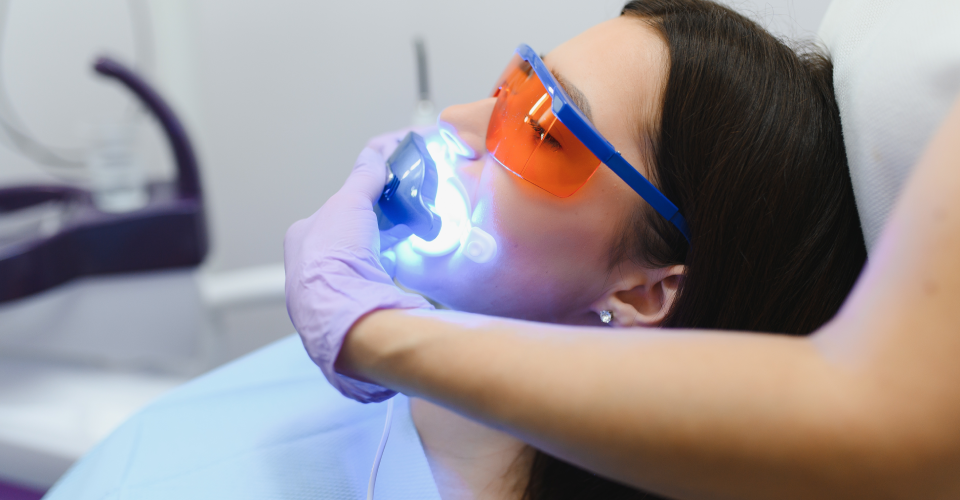
Whitening is done by two methods: office type and home type. In the office whitening process, whitening gels are applied to the teeth by the dentist and, if necessary, activated with high-power light devices. This process takes an average of 30-45 minutes and can be applied in 2 or 3 sessions depending on the degree of discoloration of the teeth. In the home whitening process, home whitening agents are used by the patient for 1-2 weeks with a whitening plate prepared by the physician. The whitening process is carried out by removing the colored pigments in the enamel structure and does not cause any harm to the tooth.
To protect against tooth decay, it is necessary to stay away from sugary foods that accumulate on the teeth and acidic drinks, and consume hard foods such as cheese, xylitol gum, which regulate mouth acidity, and leave less residue on the teeth, such as hazelnuts, walnuts and peanuts. Teeth should be brushed at least twice a day with a toothpaste containing fluoride, and oral hygiene should be supported by using dental floss and mouthwash. A dentist check-up is required every 6 months to detect caries that have just started and are at a level that can be stopped.
Small and incipient caries in the enamel tissue of the teeth can be stopped by improving oral hygiene, applying remineralization agents such as fluoride and resin infiltration (ICON) in that area, and calcium and phosphate minerals obtained from milk and dairy products consumed regularly with saliva. However, caries involving the dentin layer beneath the enamel tissue are irreversible. In these cases, it is necessary to remove the decayed tissue and fill its place with filling materials.