
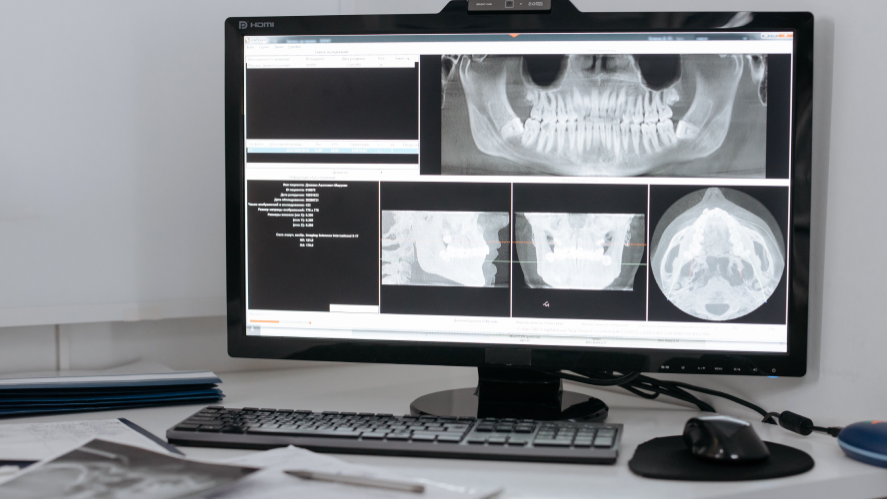
The jawbone is a living tissue that supports the teeth and plays an important role in maintaining the chewing function. Volume loss may occur in the bone tissue surrounding the teeth over time due to tooth loss, advanced gum diseases, infections or some surgical and traumatic situations. in public “jaw bone resorption” or “dental bone resorption” This condition, expressed as bone resorption or alveolar bone loss, can be medically defined as bone resorption.
Since the loss of the jawbone does not always cause significant pain, it may not be noticed in the early period. In some patients, bone loss occurs during routine dentist check-ups or radiological examinations before implant treatment.
What is Jawbone Resorption?
The part of the jawbone that surrounds and supports the teeth alveolar bone is called. This bone tissue receives regular functional stimulation during chewing through the tooth roots.
When a tooth is lost or extracted, the tooth root in that area is also eliminated. Thus, the functional stimulus transmitted to the bone decreases and volume loss in the bone may occur over time.
However, missing teeth is not the only cause of jawbone loss. Diseases that affect the tissues surrounding the teeth can also lead to bone loss.
What Causes Jawbone Melting?
The cause of jaw bone loss may vary from person to person. Among the main reasons tooth loss, advanced gum diseases, infections in the teeth and surrounding tissues, diseases and traumas around the implant is available.
Tooth Loss and Long-Term Tooth Missing
One of the important causes of jawbone loss is tooth extraction or loss.
When a natural tooth is present, chewing forces are transmitted to the surrounding bone through the tooth root. When a tooth is lost, this mechanism changes and narrowing and height loss may develop over time, especially in the alveolar bone where the tooth is located.
Therefore, in an area that has been toothless for a long time, the amount of existing bone may need to be evaluated separately when implant treatment is planned in the future.
Gum Diseases and Periodontitis
Advanced stage of gum disease periodontitisIt can affect the tissues and bone that support the teeth.
As the disease progresses, the supporting bone around the teeth may decrease. As a result, gum recession, tooth mobility, and tooth loss may occur in advanced stages.
For this reason, a significant portion of the conditions commonly referred to as "gingival osteoporosis" may be related to periodontal diseases.
Infections in Teeth and Surrounding Tissues
Infections that develop around the tooth root and remain untreated for a long time can affect the surrounding bone tissue.
Depending on the extent and location of the infection, local bone loss may occur. Therefore, it is important to evaluate dental infections not only in terms of pain but also in terms of protecting the health of surrounding tissues.
Bone Resorption Around the Implant
Bone loss doesn't just occur around natural teeth. Inflammatory diseases may also develop in the tissues around dental implants.
Peri-implantitis In this condition, inflammation in the soft tissues around the implant may be accompanied by progressive loss of the bone supporting the implant.
A dentist evaluation is important if there are symptoms such as redness, sensitivity, or bleeding during brushing around the implant.
Trauma and Surgical Procedures in the Jaw Area
Traumas, fractures or some surgical procedures in the jaw area can also affect bone tissue.
Amount of bone loss; It may vary depending on the type of trauma, the affected area and the healing process.
What are the symptoms of jaw bone loss?
Jawbone loss may progress without any symptoms, especially in the early stages.
Depending on the cause of bone loss and its location, the following symptoms may occur:
- gum recession
- Tooth roots become more visible
- Looseness or displacement of teeth
- Formation of new spaces between teeth
- Gum bleeding and sensitivity
- bad breath
- Removable dentures lose their fit over time
- Discomfort while chewing
- Thinning of the jaw bone in long-term missing teeth
Not all of these symptoms directly mean jaw bone loss. For a definitive evaluation, clinical examination and necessary radiological examinations must be performed.
Does the Jaw Bone Melt After Tooth Extraction?
After tooth extraction, a natural remodeling process begins in the bone in the extraction area.
As the tooth root disappears, the alveolar bone in the area may lose width and height over time. The amount of change in bone is not the same in every patient.
For this reason, it is important to evaluate the bone structure in the area before and after tooth extraction, especially if implant treatment is considered in the future.
How to Understand Jawbone Resorption?
It is not always possible to evaluate the condition of the jawbone only by looking inside the mouth.
The dentist first evaluates the condition of the teeth, gums and existing tooth deficiencies during the oral examination. When deemed necessary, radiological imaging methods such as panoramic x-ray can be used.
In order to evaluate three-dimensionally the width, height and relationship of the bone with the surrounding anatomical structures in some patients who are planned for implant or advanced surgical treatment. cone beam computed tomography (CBCT) may be requested.
Can Jawbone Resorption Be Stopped?
Here, the cause of bone loss must first be determined.
If bone loss is due to active periodontal disease, the priority is to control infection and inflammation. In case of bone loss due to missing teeth, appropriate treatment options can be planned by evaluating the missing tooth area and existing bone volume.
Therefore, there is no single treatment for jaw bone loss that can be applied to everyone. Treatment of bone loss depending on the cause, amount, location and general oral health of the patient. is determined accordingly.
How is Jawbone Resorption Treated?
The treatment plan varies depending on the cause of bone loss.
Periodontal treatments can be applied to control gum disease in bone loss due to periodontal disease.
In patients with missing teeth and an implant planned, it is evaluated whether the existing bone is sufficient for the implant.
In some cases where the amount of bone is insufficient bone graft, popularly known as bone powder application, or different bone augmentation methods may come to the fore.
In some patients where there is not enough bone height for the implant in the posterior region of the upper jaw, depending on the anatomical condition of the sinus area. sinus lifting Additional surgical procedures such as may be considered.
Which method is required can only be decided after clinical and radiological evaluation.
Can an Implant be Applied to a Patient with Jaw Bone Resorption?
Loss in the jawbone does not mean that implant treatment alone cannot be performed.
The important thing in implant planning is to have sufficient and suitable bone tissue in the area where the implant will be placed.
If the amount of bone is insufficient, bone augmentation procedures can be evaluated according to the patient's anatomical structure and needs. In some cases, bone graft and implant can be applied in the same session, while in other cases, bone augmentation may be performed first and the healing process may be completed.
This decision must be made individually for each patient.
What is Bone Graft (Bone Meal)?
Bone grafting is one of the surgical approaches used to support new bone formation and increase the volume of the area in areas where the amount of bone is insufficient.
The graft material and method to be applied may vary depending on the area of bone loss and the treatment to be performed.
Bone grafting is not necessary in every case of jaw bone loss. It is especially evaluated in cases where the existing bone is not sufficient during implant planning.
Can Jawbone Resorption Be Prevented?
It may not be possible to completely prevent all bone loss. However, maintaining oral and dental health can help detect some causes that may lead to bone loss at an early stage.
It is important to have regular dentist check-ups, correct oral hygiene, early treatment of gum diseases and evaluation of the long-term treatment plan of the missing area after tooth loss.
Patients with implants also need to have their gums and bone tissues around the implant checked regularly.
Which Department Should You Apply for Jaw Bone Disorders?
The cause of jawbone loss determines the area of expertise to be consulted.
Gum disease and bone loss around the teeth Periodontology, advanced bone loss, and conditions requiring bone graft and implant surgery Oral and Maxillofacial Surgery can be evaluated within the scope of
In some cases, treatment may need to be planned by evaluating different areas of expertise together.
At Istanbul Galata University Dental Hospital, the condition of the jawbone is evaluated through clinical examination and necessary radiological imaging, and treatment planning is made according to the patient's needs.
Frequently Asked Questions
Does jaw bone loss cause pain?
It does not always cause pain. In particular, periodontal bone loss can progress for a long time without significant pain. Therefore, regular dentist checks are important.
When does bone begin to melt after a tooth is extracted?
After tooth extraction, the remodeling process of the alveolar bone begins. The change in bone volume may be especially noticeable in the first months following extraction.
Does receding gums mean osteoporosis?
Not every gum recession means bone loss. However, in periodontal diseases, loss of supporting bone may occur along with gum recession. Clinical and radiological evaluation is required.
Does jaw bone loss heal on its own?
Such a conclusion cannot be reached without evaluating the cause and level of bone loss. Treatment of active disease and bone augmentation methods can be planned when necessary.
Can't an implant be placed if there is osteoporosis?
No. The presence of bone loss does not automatically preclude implant treatment. Existing bone volume and quality are evaluated; In necessary cases, bone enhancing surgical methods can be planned.
Can bone powder be used for jaw bone loss?
It can be used in some patients. Whether a bone graft is required is determined by the amount and location of bone loss and the planned treatment.
Can there be osteoporosis around the implant?
Yes. When peri-implantitis develops, loss of the supporting bone around the implant may occur. Therefore, implants also need to be checked regularly.
Medical Information: This content has been prepared for general information purposes. It is not a substitute for diagnosis and treatment recommendation. The cause of jaw bone loss and the appropriate treatment method can only be determined after a dentist examination and necessary radiological evaluations.