
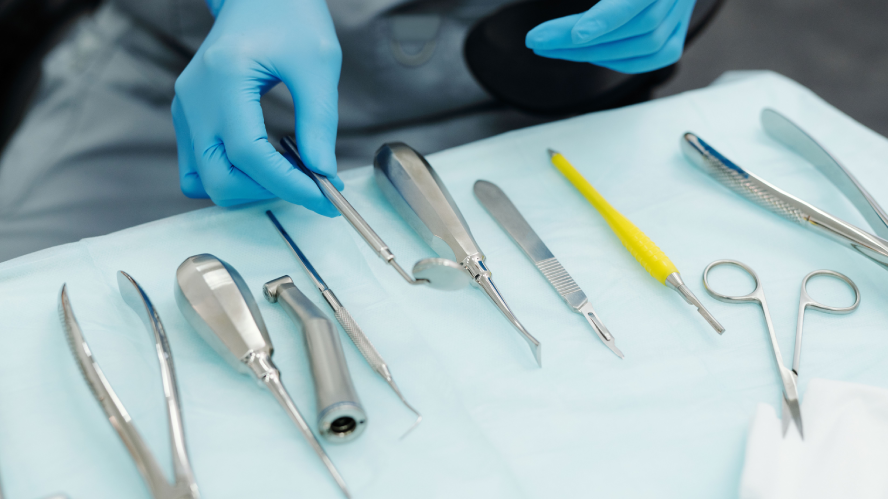
Some treatments in dentistry are not limited to teeth only. In cases involving the jaw bones, jaw joint, soft tissues in the mouth and the facial area, a more comprehensive evaluation may be required. Maxillofacial surgeryIt is the field that deals with the diagnosis and surgical treatment of diseases, injuries and structural problems that occur in the mouth, teeth, jaw and face area.
more among the public jaw surgery The scope of this field, known as , is quite wide. Many different situations, from surgical removal of impacted wisdom teeth to dental implant applications, from jaw cysts to jaw fractures, fall within the scope of maxillofacial surgery.
What Does Maxillofacial Mean?
The word “maxillofacial” refers to the jaw and facial area. used in dentistry oral and maxillofacial surgery The concept covers the surgical treatment of the oral cavity, teeth, jaw bones and tissues related to this area.
For this reason, it is not correct to think of maxillofacial surgery only as "the department where teeth are extracted". In addition to simple surgical procedures, more comprehensive operations involving the jawbone and facial skeleton are also evaluated in this field.
What Diseases Does Maxillofacial Surgery Deal With?
Not every problem that occurs in the mouth and jaw area requires the same treatment. While some conditions can be treated with routine dental practices, cases requiring surgical intervention Oral and Maxillofacial Surgery It is evaluated by.
Impacted and semi-impacted wisdom teeth, surgical tooth extractions, dental implant applications, bone graft applications to increase insufficient jaw bone and sinus lifting procedures are among the common treatments in this field.
In addition, cysts and some tumoral formations that develop in the jaw bones, infections in the mouth and jaw area, jaw fractures and facial traumas are also included in the field of work of maxillofacial surgery.
In more extensive cases where the jaws are not developmentally compatible with each other, orthognathic surgery may come to the fore.
Why Are Impacted Wisdom Teeth Evaluated by Maxillofacial Surgery?
Wisdom teeth are the last molars to erupt in the mouth. When there is not enough space in the jaw, these teeth may not erupt completely or may remain buried in the bone and gums.
Not every impacted wisdom tooth needs to be extracted. However, if the position of the tooth causes pain, recurrent infections, or problems in adjacent teeth and tissues, surgical extraction may be considered.
In particular, the position of the tooth within the bone, the structure of its roots and its relationship with the surrounding anatomical formations are important in terms of surgical planning. For this reason, radiological evaluation as well as clinical examination is performed before the procedure.
How to Plan Implant Treatment in Maxillofacial Surgery?
Dental implant applications are also one of the important areas of work in jaw surgery. However, in implant treatment, not only the area where the missing tooth is located is evaluated. The width, height and structure of the jaw bone where the implant will be placed are also part of the treatment plan.
Volume loss in the jawbone may occur over time, especially in people who have been missing teeth for a long time. In cases where the amount of existing bone is not sufficient for implant application bone graftMethods such as bone powder application, as it is popularly known, can be used.
In some patients with insufficient bone height in the posterior region of the upper jaw, before or together with the implant treatment, sinus lifting process can be planned.
Whether these procedures are required or not is determined after evaluating the patient's jaw structure and radiological findings.
Jaw Cysts and Formations in the Jaw Bone
Cystic formations may develop in the jaw bones for different reasons. While some jaw cysts cause symptoms such as pain or swelling, some may progress for a long time without causing any complaints. For this reason, they are sometimes noticed accidentally during a routine dental x-ray.
The size of a formation detected in the jawbone, its location, and its relationship with the surrounding teeth and anatomical structures are examined. If necessary, surgical removal or pathological examination by taking tissue samples may be planned.
Since not every radiological formation should be evaluated in the same way, correct diagnosis is one of the most important stages of treatment planning.
Maxillofacial Surgery for Jaw Fractures and Facial Traumas
Fractures may occur in the lower jaw, upper jaw or facial bones as a result of a traffic accident, fall, sports injury or blows to the face.
In addition to pain and swelling in jaw fractures, changes in the closing of the teeth, difficulty in chewing, limitation in opening the mouth, or differences in jaw movements may be observed.
How the treatment will be performed is determined by the location and shape of the fracture and the condition of the surrounding tissues. In cases requiring surgical treatment, the main purpose is not only to heal the fracture but also to preserve the jaw function and the closing relationship of the teeth.
What is Orthognathic Surgery?
One of the more comprehensive applications of maxillofacial surgery It is orthognathic surgery. This surgical method is used to correct skeletal position disorders of the lower and upper jaw.
In cases where the lower jaw is clearly forward or backward, the upper and lower jaw do not develop in harmony with each other, or there is significant asymmetry in the facial area, moving the teeth only orthodontically may not be sufficient.
In such cases, orthodontic treatment and jaw surgery can be planned together. The aim of the treatment is to regulate the relationship of the jaws with each other, improve chewing and closing functions, and, in appropriate cases, to ensure that the face-jaw ratios become more balanced.
Is Surgery Required for Jaw Joint Problems?
The jaw joint is an important structure that allows the lower jaw to move and is involved in functions such as speaking, chewing and opening the mouth in daily life.
Sound coming from the jaw joint, pain in jaw movements, limitation in opening the mouth, or occasional locking of the jaw may occur for different reasons.
However Not every jaw joint problem requires surgery. First, the source of the problem is determined and appropriate treatment options are evaluated. In certain cases where non-surgical treatments are not sufficient, interventional or surgical methods may be considered.
What Examinations Are Performed Before Maxillofacial Surgery?
Surgical planning begins with an examination of the patient. Current complaints, oral and dental health, medications used and general health status are evaluated.
Depending on the procedure to be performed, imaging methods such as panoramic x-ray may be used. Three-dimensional evaluation of the jaw structure may be required, especially in cases of impacted teeth, implant planning, bone deficiencies or more extensive surgical procedures. In this situation cone beam computed tomography (CBCT) available.
The images obtained help to evaluate the surgical area and surrounding anatomical structures in detail.
Can Maxillofacial Surgery Be Performed Under General Anesthesia?
The anesthesia method to be applied in maxillofacial surgery varies depending on the scope of the procedure to be performed. While impacted tooth extraction or some implant applications can be performed under local anesthesia, the option of general anesthesia can be considered in more extensive operations or in suitable patients.
Here, the decision is not made solely based on the patient's preference. The nature of the surgical procedure to be performed, the patient's general health condition and suitability for anesthesia are evaluated together.
How Long Does It Take to Heal After Maxillofacial Surgery?
Recovery time varies depending on the operation performed. The recovery after the surgical extraction of an impacted wisdom tooth is not the same as the recovery after a jaw fracture or orthognathic surgery.
Depending on the type of surgery, swelling, tenderness, pain or temporary limitation in opening the mouth may occur in the first days. After the procedure, the patient is given special recommendations regarding nutrition, oral care, medication use and follow-up appointments.
For this reason, "how many days does recovery take after maxillofacial surgery?" There is no single answer to the question. The duration varies depending on the scope of the procedure and the patient's recovery process.
Which Department Should You Apply for Maxillofacial Surgery?
In cases such as impacted teeth, jaw bone problems, implant surgery, jaw cysts, jaw fractures and structural disorders of the jaws Oral and Maxillofacial Surgery You can refer to the section.
At Istanbul Galata University Dental Hospital, surgical conditions involving the mouth, teeth and jaw area are evaluated with clinical examination and necessary radiological imaging. The treatment plan is created according to the patient's needs; A multidisciplinary approach is adopted in cases that require different areas of expertise to work together.
Medical Information: This article has been prepared for general information purposes. It is not a substitute for diagnosis and treatment recommendation. The treatment method to be applied is determined individually after the dentist examination and necessary radiological evaluations.