
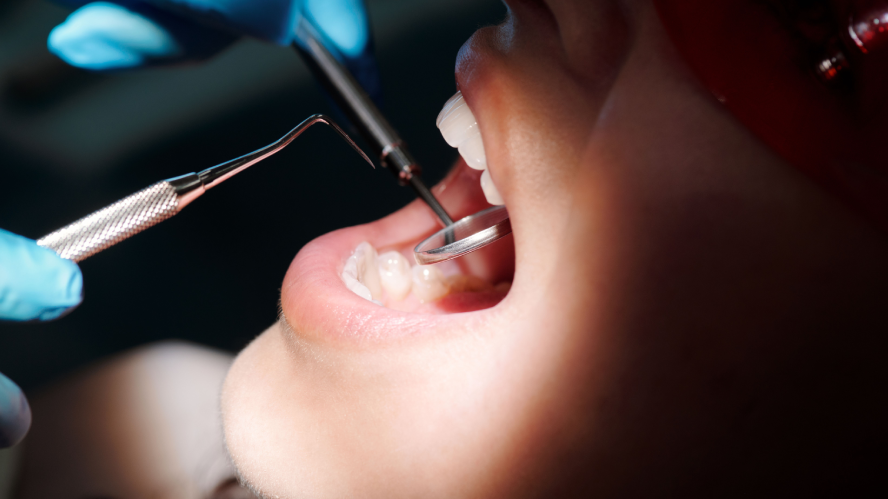
One of the first questions that comes to mind when it comes to dental scaling is how often this process should be done. Although it is a common thought that "tooth scaling should be done every 6 months", it is actually There is no single period valid for everyone.. Tartar formation rate; It may vary from person to person depending on oral care habits, teeth structure, saliva characteristics, smoking and gum health.
For this reason, the frequency of dental scaling should be determined not according to the calendar, but according to the mouth and gum evaluation made by the dentist. While longer intervals of cleaning may be sufficient for some people, more frequent professional care may be required in people with rapid tartar accumulation or gum disease.
What is Dental Stone and Why Does It Form?
During the day, a soft layer called bacterial plaque constantly forms on the teeth. This plaque can be largely removed with regular and effective oral care. However, plaque that is not cleaned hardens over time under the influence of minerals in saliva. dental calculus, also known as tartar can transform.
Tartar is most commonly seen at the gum line and in areas where the toothbrush has difficulty reaching. It can accumulate not only on the visible surfaces of the teeth, but also below the gum line.
Unlike plaque, it is not possible to completely remove hardened tartar by daily brushing or flossing. At this point, professional dental scaling is required.
How Many Months Should Dental Stone Cleaning Be Done?
It is not right to recommend a fixed practice such as "every 6 months" or "once a year" for everyone for dental scaling. Six monthly dentist checks It may be a convenient follow-up pattern for many people; However, this does not mean that dental scaling will be performed at every check-up.
During the examination, tartar accumulation and gum health are evaluated. It is decided as a result of this evaluation whether cleaning is needed or not.
Check-up and professional care intervals can be kept shorter in people who have rapid tartar formation, have difficulty maintaining oral hygiene, smoke or are at risk of gum disease. A different follow-up interval may be appropriate for people with good oral and gum health.
Therefore, the right question is only "How often should dental scaling be done?" not, “Which interval is suitable for my oral and gum health?” should be.
Why is Dental Stone Cleaning Important?
Dental tartar is not just an aesthetic problem on the teeth. Its rough surface may make it easier for new bacterial plaque to adhere and may pave the way for continued bacterial accumulation around the gums.
As a result, redness, swelling and bleeding during brushing may occur in the gums. This table is for patients with gum disease in the early stages. gingivitis may be related to.
When gum disease progresses and begins to affect the tissues that support the teeth, periodontitis can develop. Periodontitis is a more advanced gum disease that can lead to loss of supporting tissues and bone around the teeth.
Therefore, regular check-ups and professional cleaning when necessary are important not only for the appearance of the teeth but also for preserving the health of the gums.
How to understand if dental stone is formed?
Tartar can sometimes be noticed as hard, yellow or brownish deposits on the teeth. However, it is not always possible for the person to see the tartar under the gums.
Symptoms such as bleeding gums, redness or swelling, bad breath, and gum recession may indicate that gum health needs to be evaluated.
However, gum diseases do not always begin with obvious complaints. Therefore, the absence of any pain or bleeding does not mean that there is no need for professional cleaning.
How is Dental Stone Cleaning Done?
During dental scaling, hardened formations accumulated on tooth surfaces and around the gums are removed using professional devices and, when necessary, hand tools. Then, procedures can be applied to make the tooth surfaces smoother.
In patients with advanced gum disease and deeper accumulations under the gums, periodontal treatments other than standard dental scaling may be needed. Therefore, the scope of the operation to be performed is determined as a result of the examination.
Does Dental Stone Cleaning Damage Tooth Enamel?
One of the common concerns that patients have about dental scaling is that the process erodes tooth enamel or thins the teeth.
Dental scaling, performed professionally and with the appropriate technique, is not a process performed with the aim of thinning the tooth enamel by scraping it. The main purpose is to remove plaque and hardened tartar stuck to the tooth surface.
It may be thought that in people with dense tartar, previously unnoticeable gaps appear between the teeth after cleaning. These gaps are not created during cleaning; By removing accumulated tartar, the existing tooth and gum structure becomes more visible.
Is Sensitivity After Dental Stone Cleaning Normal?
After dental scaling, some people may experience short-term hot-cold sensitivity or tenderness in their gums. This situation may be more evident, especially in people with intense tartar accumulation or gum recession.
Sensitivity is mostly temporary. However, if there is sensitivity that persists for a long time or gets worse, a dentist should be consulted.
Does Dental Stone Cleaning Eliminate Bad Breath?
One of the important causes of bad breath is the accumulation of bacteria around the teeth and gums. If the source of bad breath is plaque, tartar or gum disease, professional cleaning and necessary periodontal treatment can help control the odor.
However, not all bad breath is caused by tartar. Caries, dry mouth and different oral or systemic causes can also cause bad breath. Therefore, it is important to determine the cause of persistent bad breath.
How can tartar formation be reduced?
Once tartar forms, it cannot be removed by brushing at home; However, it is important to perform regular daily oral care to reduce the formation of new plaque and tartar.
Brushing the teeth with the correct technique at least twice a day, cleaning the spaces between the teeth with dental floss or appropriate interface cleaning tools, and not neglecting tongue care will help keep bacterial plaque under control.
Since cigarettes and other tobacco products can also negatively affect oral and gum health, it is important to quit these habits.
Is Dental Stone Cleaning Necessary at Every Check-Up?
No. Regular dentist check-ups and dental scaling are not the same thing. During the control examination, oral and dental health is evaluated; If there is tartar accumulation or periodontal care needed, the appropriate procedure is planned.
For this reason, dentist check-ups should not be skipped, not only with the thought of "it's time for a cleaning" but also to regularly evaluate gum health.
At Istanbul Galata University Dental Hospital The condition of the gums and surrounding tissues is evaluated clinically to determine whether the patient needs professional scaling or periodontal treatment. Control and treatment intervals are planned taking into account the person's oral health and current risks.
Medical Information: This article has been prepared for general information purposes. It is not a substitute for diagnosis or personalized treatment advice. How often dental scaling should be done should be determined according to the person's oral and gum health after a dentist examination.