
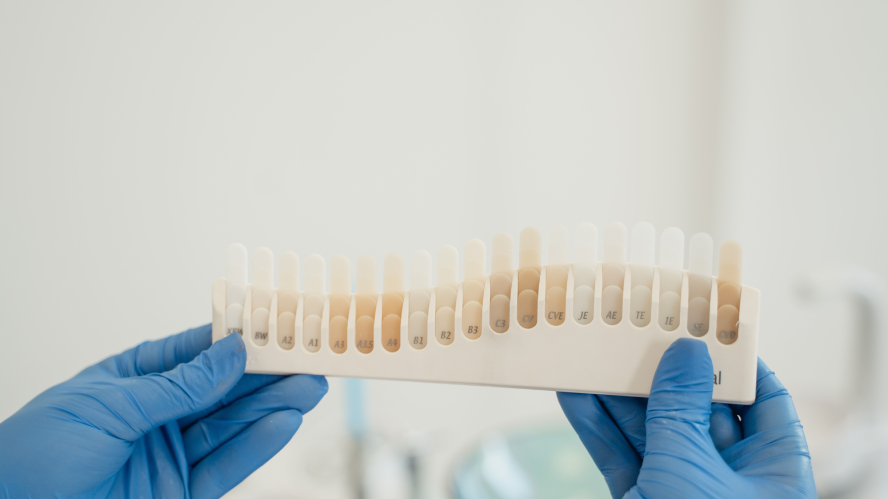
Many people who are unhappy with the color of their teeth ask the same question before undergoing teeth whitening: How white will my teeth be after the procedure? In particular, people with discoloration caused by tea, coffee, or smoking wonder how different the appearance of their teeth will be from their natural color after the whitening procedure.
Well, How many shades does teeth whitening lighten? Professional teeth whitening treatments may result in teeth becoming a few shades lighter. While the color change may be more noticeable in some patients, it may be more subtle in others. However, it is not possible to predict with certainty exactly how many shades lighter each patient’s teeth will become.
The effectiveness of teeth whitening varies depending on the teeth’s original color, the cause of discoloration, the structure of the teeth, and the method chosen. For this reason, it is important to assess the current color of the teeth before treatment and to have a realistic discussion about the achievable results.
How Does Teeth Whitening Lighten the Color of Your Teeth?
Teeth whitening is a cosmetic dental procedure designed to reduce discoloration in the natural structure of the teeth.
Professional teeth-whitening procedures typically use products containing hydrogen peroxide or carbamide peroxide. These substances help lighten the color of the teeth by acting on the compounds that cause discoloration in dental tissue.
However, teeth whitening and the removal of stains from the tooth surface are not the same process.
Tartar removal and polishing procedures can help remove extrinsic stains that have accumulated on the tooth surface. The whitening process, on the other hand, aims to lighten the tooth’s natural color.
This distinction is particularly important for patients who believe their teeth have yellowed due to coffee or tea. While for some people, simply removing surface stains can make their teeth look cleaner, whitening treatment may be necessary to achieve a lighter tooth color.
How Many Shades of Color Change Can Be Expected After Teeth Whitening?
The degree of color change achieved through teeth whitening varies from person to person. Although it is possible to lighten the teeth by a few shades in clinical practice, the extent of this change cannot be determined with certainty in advance.
In dentistry, special color scales or digital measurement methods can be used for color assessment. These systems help compare tooth color before and after treatment.
However, there is an important detail to note here: Not all measurement systems used to describe changes in tooth color are the same. Therefore, terms found online such as “3 shades,” “5 shades,” or “8 shades whiter” do not always represent results that can be directly compared with one another.
While one patient may experience a noticeable lightening of their teeth, another patient may see only a more subtle change. Furthermore, the change measured on the color scale may not always match the whiteness the person perceives in the mirror.
For this reason, rather than evaluating the success of a teeth-whitening treatment solely based on how many shades lighter the teeth have become, both the initial color of the teeth and the natural appearance of the final result should be considered together.
What Factors Affect the Results of Teeth Whitening?
There are many factors that influence the results of teeth whitening treatments. Even when the same method is used, the degree of color change may vary between patients.
The Natural Color of Teeth
The natural color of teeth is not the same for everyone. While some people are born with lighter-colored teeth, others may have teeth that are more yellow or darker in tone.
Determining the current tooth color before beginning the whitening process is important for evaluating the treatment outcome.
The Cause of Discoloration
The cause of tooth discoloration can affect the response to whitening treatment.
Discoloration caused by tea, coffee, and tobacco use does not share the same characteristics as certain intrinsic discoloration that occurs during tooth development.
The whitening process may proceed differently, particularly in teeth with discoloration caused by tetracycline use or certain developmental changes in enamel and dentin. In some cases, alternative treatments may need to be considered to achieve the desired aesthetic result.
Bleaching Method Used
In-office teeth whitening and at-home teeth whitening methods performed under a dentist’s supervision follow different treatment protocols.
The composition, concentration, and duration of application of the product used are among the factors that influence the treatment outcome.
Structural Characteristics of Teeth
The thickness of tooth enamel, the natural color of dentin, and the light-reflecting properties of teeth all play a role in how tooth color is perceived.
For this reason, even if results close to the same color scale are achieved after whitening, the appearance of the teeth may vary from person to person.
Is In-Office Teeth Whitening or At-Home Whitening More Effective?
The two methods most commonly used in teeth whitening treatments are in-office whitening and at-home whitening performed under a dentist’s supervision.
Office type teeth whitening, is performed by a dentist in a clinical setting. During the procedure, precautions are taken to protect the gums, and the appropriate whitening product is applied for the specified duration. Since higher-concentration products can be used with this method, a noticeable change in tooth color can be achieved in a short period of time.
Home teeth whitening It is performed using the appropriate trays and whitening products prepared or recommended by the dentist, according to the prescribed treatment schedule. The color change generally occurs over a longer period of time.
Both methods can be effective in suitable patients. Studies show that similar final color changes can be achieved depending on the protocol used.
Therefore, it cannot be said that in-office teeth whitening will necessarily result in a greater lightening of shade for every patient. The choice of method depends on the individual’s oral health, expectations, and the dentist’s assessment.
Do Yellow Teeth Respond Better to Teeth Whitening?
The characteristics of tooth discoloration can affect the results of teeth whitening. In general, certain types of discoloration—where yellow tones predominate—may respond better to whitening treatment than gray discoloration or certain types of intrinsic discoloration.
However, this does not mean that all yellow teeth can be easily whitened or that results cannot be achieved with gray discoloration.
The cause of the change in tooth color, the tooth tissues associated with the discoloration, and the existing tooth structure should be evaluated together.
If there is a noticeable color change in a single tooth, the cause may not be merely cosmetic discoloration. Previous trauma, root canal treatment, or conditions affecting the vitality of the tooth can also lead to color changes.
In such cases, the tooth must be clinically evaluated before whitening.
Does Teeth Whitening Lighten the Color of Fillings and Veneers?
One of the important things to know about teeth whitening treatments is that the procedure affects natural tooth structures and restorative materials differently.
Teeth-whitening products can lighten the color of natural teeth. However, composite fillings, porcelain veneers, and zirconia restorations do not whiten in the same way.
Especially in people with fillings or crowns on their front teeth, a color difference may become apparent between their natural teeth and existing restorations after teeth whitening.
For this reason, it is important to plan teeth whitening treatment in advance for patients with restorations in the aesthetic zone.
When deemed necessary, the option of placing a restoration that matches the new tooth color following whitening may be considered. However, existing fillings or crowns do not necessarily need to be replaced after every whitening procedure.
How Long Do the Results of Teeth Whitening Last?
The results of teeth whitening do not last a lifetime.
Over time, teeth may experience further discoloration due to factors such as tea, coffee, red wine, and tobacco products that can cause staining.
However, the natural aging process of the teeth and personal oral hygiene habits can also affect how long the whitening results last.
While some people can maintain the achieved color change for a long time, some patients may experience a return to their original color at an earlier stage.
For this reason, it is not accurate to give a single timeframe that applies to everyone regarding the longevity of the whitening results.
Regular oral care, limiting habits that cause staining, and following your dentist’s recommendations can help maintain the results achieved.
If necessary, additional teeth-whitening treatments may be scheduled following a dentist’s evaluation.
Does Teeth Whitening Harm Your Teeth?
One of the questions people who want to have their teeth whitened often ask is whether the procedure damages tooth enamel.
In suitable patients, teeth whitening procedures performed with the right products and under the supervision of a dentist are generally considered safe.
However, side effects such as temporary tooth sensitivity and gum irritation may occur during or after the procedure. In particular, the uncontrolled use of high-concentration products can increase the risk of adverse effects.
For this reason, products purchased online or unsupervised at-home teeth-whitening methods should not be considered equivalent to professional treatment.
It is important to assess tooth decay, gum disease, and any existing sensitivity issues before teeth whitening.
What Should You Keep in Mind Before Teeth Whitening?
Before the teeth-whitening procedure, the overall health of the teeth and gums should be assessed.
If there are active cavities, gum disease, cracks, or noticeable sensitivity, these issues may need to be addressed first.
In addition, the patient's expectations are an important part of treatment planning.
Not everyone’s teeth whiten to the same degree, and the natural range of tooth color varies from person to person. For this reason, it is important to explain in advance the results that can be achieved through teeth whitening to patients who expect a very light or unnatural-looking white shade.
Recording the color of the teeth before treatment and documenting it with photographs when necessary can help ensure a more objective assessment of the changes after the procedure.
Do Teeth Look White Right Away After Teeth Whitening?
Especially with in-office teeth whitening treatments, a change in color may be noticeable after the procedure. However, the appearance immediately following the treatment may not always reflect the final tooth color.
The temporary loss of moisture in the teeth during the whitening process may cause them to appear lighter at first. As the teeth rehydrate, there may be some change in their color appearance.
For this reason, it is important not to rely solely on the image taken immediately after the procedure when evaluating the whitening results.
The physician can determine the appropriate time for evaluation based on the method used.
Teeth Whitening at Istanbul Galata University Dental Hospital
The goal of teeth whitening treatment is not to achieve the same number of shade levels of lightening for every patient, but rather to achieve a natural-looking color change that is appropriate for the individual’s tooth structure and current oral health.
At Istanbul Galata University Dental Hospital, requests for teeth whitening are evaluated by taking into account the patient’s oral and dental health as well as their aesthetic expectations. When necessary, appropriate whitening methods and alternative aesthetic treatment options can be planned within the field of Restorative Dentistry.
To assess the current color of your teeth and learn about the results that can be achieved through teeth whitening, you can schedule an appointment at our clinic.